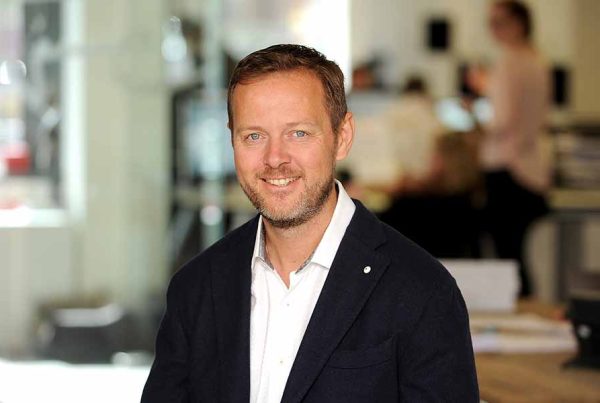





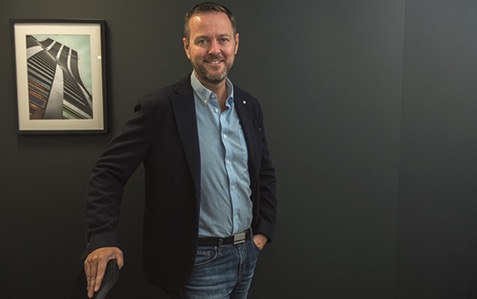
Ian Rickwood has an unusual CV for the boss of a private equity real estate business.
The Henley chief executive had a high-flying career at PepsiCo that he abandoned in 1996 to bring the fast-food giant Subway to the UK. He then sold out four years later and bought the struggling Benjys sandwich chain.
It was only in 2006 that he moved into property full time and has since built a business with more than £1bn in assets under management. In the last year alone, Henley has doubled in size and created new divisions investing in everything from outdoor advertising to hotels in the US.
Away from the game
Family: Married with two children
Interests: Manchester City season ticket holder (Henley is also a sponsor) and active member of the church in the US and UK
Second home: Naples, Florida, where he spends 14 weeks a year
Property Week caught up with Rickwood at the company’s headquarters in Woking to find out how he started out in the industry, the thinking behind Henley’s varied investments and his ambitions to grow the business internationally. Rickwood got his first experience of real estate investment in his Subway days. With family and friends, he set up a property company that would buy vacant shops to turn them into Subways. It gave him an early insight into the sector.
“Of course, we learned that if you buy something vacant and put a 20-year lease on it, you get this wonderful thing called yield compression. That was my first lesson in real estate economics,”
he says.
However, it was many years later, after Benjys was sold out of administration to Dragons’ Den star James Caan, that Rickwood threw himself into the property world, setting up Henley in 2006.
Initially the business focused on developing high-end residential property in Surrey. However, little more than a year after starting out, the financial crisis struck.
“All the gains we made in planning were taken away by the market, but we managed to keep our heads above water,”
says Rickwood.
The experience taught Rickwood about the importance of spreading risk and this instinct to diversify led to the creation of Henley’s unusual ‘entrepreneurs who back entrepreneurs’ business model, which bears some similarity with Palmer Capital’s venture capital model.
Henley acts as a platform for a number of different businesses headed by entrepreneurs, helping them with everything from regulation to underwriting, and most importantly, matching them with the capital they need to grow.
When it comes to fundraising, Rickwood says his experience at Procter & Gamble and then PepsiCo has been invaluable at Henley. In particular, he says the lessons learned about “the importance of brand and being consistent in what you put out”, as well as focusing on customer needs, are applicable.
“You’ve got to focus on benefits, but a lot of people talk about features. We’re pretty good at that, getting to the nub of the point,”
he says.
In practice, this means focusing less on buildings and more on investment performance. On that score, Henley has a good story to tell.
Focus on growth
The company operates on a deal-by-deal basis, which Rickwood says provides more flexibility and gives investors a “candy store” of investment options. To date, it has created 60 deal vehicles and exited 22, producing an average IRR (internal rate of return) of more than 40%.
Its investments cover a broad range of sectors including healthcare, residential land, hotels and outdoor advertising. The latest business created by the company is Henley Ark, a partnership with Cheyne Capital and industry veteran Charles MacGregor, which officially launched last week and takes Henley into another new sector – student accommodation.
The one thing that ties together all the businesses and entrepreneurs that Henley invests with is their desire to grow.
“It only makes sense to come into Henley if you want to triple the size of your business because you are giving up half of it – it’s a 50-50 joint venture,” says Rickwood. “We’re really looking for people who are saying we want to put three, four or five times on their business.”
The businesses Henley creates also have to fit one of three central themes: arbitrage, distress or dislocation. Rickwood calls this the firm’s ‘ADD’ strategy.
The new student venture fits the arbitrage theme, as does Henley Healthcare Investments, which invests in housing for vulnerable adults; and Henley Outdoor Media Assets, which specialises in buying outdoor advertising displays. Each involves taking advantage of the arbitrage between the buy-side and the sell-side of a market by acquiring small assets that are worth more once they are assembled into portfolios, because they then become attractive to institutional investors.
As for the other two themes, in recent years, the strong health of the real estate market means Henley has had few opportunities to capitalise on distress but dislocation has thrown up opportunities.
Henley Camland is a good example. The business looks to take advantage of the retreat of housebuilders from the market for large land sites that need work before they can be built on. It specialises in buying these sites and making them ready for the housebuilders.
For example, earlier this year, Henley Camland agreed a deal to buy land at the Eastern Quarry part of Ebbsfleet Garden City from Land Securities, which has the capacity for 4,700 homes.
Rickwood reveals there is a lot more to come.
“We have sites we’re looking at up and down the country,” he says. “We’re hopeful we will have acquired sites to deliver 20,000-plus homes in the next 12 months.”
Across the pond
Rickwood is also focused on growing internationally, both in Europe and the US. Henley USA, which the company created this summer, with offices in Boston, Massachusetts, and Orange County, California under the leadership of Garrett Solomon, looks set for some major investment.
“We’re looking to close some very large deals in the US later this year,”
says Rickwood, adding that these are across several locations in San Francisco, Palm Springs and New York.
The deals would add to an already substantial investment Henley made last year when it signed a $100m (£78m) deal with WaterWalk Hotel & Apartments to fund its expansion.
Apart from the desire to diversify and grow the business, Rickwood has personal reasons for focusing on the US. His family owns a house in Naples, Florida, where they spend about 14 weeks of the year.
“Because we know it and love it, we thought it would be a good idea to take business there as well,”
he says.
Rickwood seems a little surprised at how fast the business has grown, describing it as having
“morphed into something far larger than was originally anticipated”.
The growth is certainly impressive. Assets under management have doubled every year and staff numbers have followed a similar trajectory, more or less doubling to 70 in the past year alone.
Keeping up that rate of development will become harder, but don’t be surprised to hear more about Henley as the company builds its existing businesses, expands overseas and breaks into more sectors.
7th October 2016 | Article by Phil Weedon | PropertyWeek
Image Credit | Property Week
Read the full article at: www.propertyweek.com